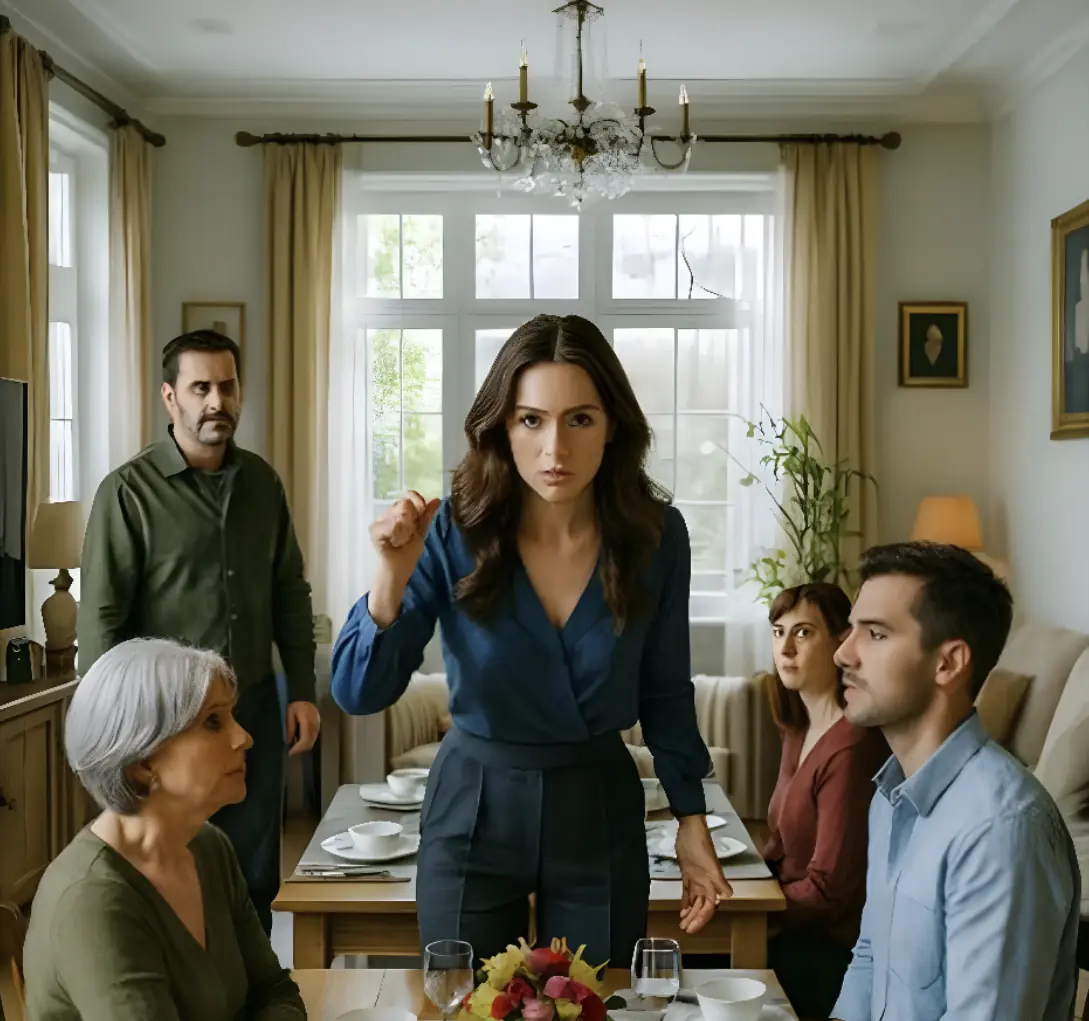
Family is supposed to be forever — or so Hannah Lewis had been told her entire life.
But no one tells you what to do when “forever” becomes a cage.
She used to think love meant endurance — staying quiet, keeping peace, forgiving things that weren’t accidents. Until the afternoon her mother said, “You owe us everything you have.”
That was the day Hannah realized blood wasn’t the same as belonging.
It started with a phone call.
She was at her apartment downtown, midway through grading essays — she taught literature at a community college — when her phone lit up with her sister’s name: Claire.
“Hannah,” Claire said breathlessly, “Mom’s furious. She says you haven’t sent money this month.”
“I already paid the mortgage on her house last week.”
“She says it’s not enough. The roof needs repairs. She told me to remind you that Dad sacrificed everything for you.”
Hannah rubbed her temples. “Claire, I’m thirty-five. I’ve been sacrificing for them since I was twenty.”
“Don’t make it sound like a burden,” Claire snapped. “They’re our parents.”
The line went dead.
Hannah sat there staring at the papers in front of her, her students’ words blurring into a single, endless paragraph about obligation.
Her parents had never been cruel — not in the obvious ways. They were the kind who used guilt like currency. Every favor came with an invisible interest rate.
When Hannah got her first job, her mother had cried. “We’re so proud. You’ll finally be able to help.”
When she bought her first car, her father had frowned. “A teacher’s salary is nothing without family support.”
When she’d said she wanted to move out of their house, they’d said, “Why abandon us after all we’ve done?”
So she stayed for five more years. Paid the bills. Cooked the dinners. Took her mother to appointments. Listened to her father complain that her success was “his investment paying off.”
When she finally left, it wasn’t rebellion. It was survival.
Two days after the phone call, Hannah drove home for Sunday lunch — out of habit, not desire. The same peeling fence. The same wilted hydrangeas.
Inside, the air smelled like old lavender and resentment.
Her mother sat at the dining table, arms crossed. “You’ve changed, Hannah.”
Hannah set down her bag. “I hope so.”
“You don’t call. You don’t visit. You think money replaces love.”
“I think love shouldn’t have a price tag.”
Her father looked up from his newspaper. “Watch your tone. We gave you everything. You wouldn’t have your degree without us.”
“I earned scholarships,” she said quietly.
He slammed the paper down. “Who raised you to be so ungrateful?”
Something inside her snapped — not loudly, but cleanly.
“I think,” she said, “you raised me to believe I’m responsible for everyone’s happiness except my own.”
Her mother’s eyes flashed. “You owe this family respect.”
“I owe myself peace.”
The silence that followed was heavier than shouting.
Hannah left early that day, driving aimlessly until she found herself at a small park near the river. She sat on a bench, watching the water move — effortless, unbothered, free.
For the first time, she allowed herself to say it aloud: They don’t love me the way I need to be loved.
It wasn’t bitterness. It was clarity.
Weeks passed. Her parents stopped calling. Claire sent short, clipped messages — reminders about bills, questions about holidays.
Then, one evening, there was a knock on Hannah’s door.
Claire stood there, red-eyed, holding a folder.
“Mom’s heart isn’t good,” she said. “She wants to transfer the house into your name — but you’ll take over the debt.”
Hannah blinked. “She wants to give me her house and her loans?”
“She says it’s fair. You’re the responsible one.”
“Claire,” Hannah said softly, “this isn’t responsibility. It’s control.”
Her sister’s voice cracked. “You’re heartless. She cries every night because of you.”
“Does she ever cry for me?” Hannah asked quietly.
Claire looked away.
Hannah stepped aside, holding the door open. “Come in. Let’s talk.”
They talked for hours — about childhood, about how their parents had pitted them against each other, about how guilt had become their love language.
When Claire finally left, she didn’t look angry anymore — just tired.
Before she walked out, she said, “You’re brave. I wish I was.”
Hannah didn’t hear from her parents for nearly a month. Then one morning, she received a letter — handwritten in her mother’s elegant script.
You’ve made your choice. Don’t bother coming for Christmas. I hope your independence keeps you warm.
Hannah folded the letter carefully and placed it in a drawer. She didn’t cry. Some endings don’t need tears — only acceptance.
The holidays came and went quietly. She spent Christmas Eve with friends, laughing over cheap wine and takeout. It wasn’t perfect, but it was real.
Still, part of her ached. Love, even when poisonous, leaves an imprint.
Then, one snowy afternoon, she received a call from a number she didn’t recognize.
“Ms. Lewis?” a voice asked. “This is Nurse Jensen from St. Mary’s Hospital. Your mother’s had a minor heart episode. She’s stable, but she asked for you.”
Hannah hesitated. The old reflex — drop everything, go, fix it — surged through her. But then she remembered the letter. The silence. The endless taking.
She drove there anyway. But this time, she didn’t go as the obedient daughter. She went as herself.
When she entered the hospital room, her mother’s eyes widened. “You came.”
“Yes,” Hannah said simply.
Her father was there too, quiet in the corner.
Her mother’s voice trembled. “I thought you didn’t care anymore.”
“I care,” Hannah said. “But caring doesn’t mean surrendering.”
Her mother frowned. “You sound just like those therapists on television.”
“Maybe they have a point,” Hannah said gently. “Mom, I love you. But I can’t keep fixing what you break just so you don’t have to see it.”
Tears filled the older woman’s eyes. “So you’re leaving us?”
“I’m not leaving,” Hannah said. “I’m letting go.”
For once, her father didn’t interrupt. He just looked down at his hands.
The silence between them was different now — not cruel, not manipulative. Just honest.
Weeks later, Hannah visited again. Her mother was recovering, softer somehow. They spoke — really spoke — for the first time in years.
“You remind me of your grandmother,” her mother said one day. “She stopped talking to her family too.”
“Did she?”
“She said love without respect isn’t love at all.”
Hannah smiled faintly. “Maybe it runs in the family.”
By spring, Hannah bought a small house of her own — bright, unpretentious, with a wild garden that refused to stay tamed.
She still sent her parents a card once a month. Sometimes they replied. Sometimes they didn’t.
But when she walked through her door each evening, she felt something she hadn’t felt since childhood: safety.
One afternoon, Claire visited with her kids. They made tea, sat in the garden, and watched the light fade.
“Do you ever miss them?” Claire asked.
“Every day,” Hannah said. “But missing them doesn’t mean I want to go back.”
Claire nodded. “I think I get it now. You didn’t break the family. You just stopped letting them break you.”
Hannah smiled. “Exactly.”
Later that night, as she sat by the window grading essays, she reread one line a student had written:
Freedom isn’t the absence of love. It’s the presence of self-respect.
She underlined it twice.
Because for the first time in her life, she understood:
sometimes family love isn’t lost — it’s redefined.
And in that quiet space where guilt used to live, something new had grown — peace.