The village of Sakteng clung to the eastern slopes of Bhutan like a secret. Mist wrapped its rooftops in the mornings, prayer flags whispered across the ridges, and the only road in was more a suggestion than a certainty. Most winters, the snow came early, sealing the pass until spring.
For Tenzin Dorji, this isolation was both sanctuary and prison.
He was the village’s watchmaker—a trade as rare as rain in the dry season here. Nobody wore fine watches in Sakteng; most kept time by the sun and the temple bell. But Tenzin didn’t fix watches to make a living. He fixed them because each ticking heart was a piece of his own past, and he couldn’t bear to let them stop.
Twenty years earlier, he had been an apprentice in Thimphu under his father, who’d taught him to handle gears with the patience of a monk turning prayer wheels. One winter, his father had taken him on a journey to deliver a repaired pocket watch to a wealthy merchant in Mongar. They never reached him.
A snowstorm had swept the mountain pass, forcing them to shelter in a cave. It was there, in the howling dark, that they had heard the sound—low, guttural, and close.
The snow leopard had been nothing but a shadow with eyes. His father had stood between it and Tenzin, making himself tall, loud, holding an iron tool like a blade. The animal had retreated, vanishing into the blizzard. But when the storm cleared, Tenzin’s father was gone, his footprints leading into the whiteness.
They never found him.
Now, Tenzin lived alone above his workshop, mending timepieces for strangers and pretending he had made peace with the mountains. But the truth was, he had never forgiven them—or the snow leopard that haunted his dreams.
The first paw print appeared in late November, just outside the back door.
It was larger than his palm, pressed deep into the snow. Tenzin crouched, his breath clouding in the air, and felt the familiar tightening in his chest. Snow leopards were rare even here. To see fresh tracks so close to the village was unusual.
That night, he set a lantern by the window, telling himself it was for the light. But part of him—an old, stubborn part—was waiting.
On the third night, he saw it.
The leopard stood at the edge of the treeline, its coat a pale ghost against the snow, tail curling like a question mark. They stared at each other for a long moment before the cat turned and melted into the forest.
The visits continued. Sometimes Tenzin would see the leopard pacing the ridge above his shop; other times, only the tracks in the snow told him it had been there. He began leaving scraps from his supper outside, unsure if he wanted the animal to come closer or stay away forever.
It was during one of these nights that a storm rolled in suddenly, the kind that swallowed the village in minutes. Tenzin had just latched the shutters when he heard it—a cry, sharp and thin, cutting through the wind.
It wasn’t human.
He grabbed his coat, lantern, and a length of rope, and stepped into the blizzard. The snow stung his face, visibility dropping to mere feet. But the cry came again, leading him toward the treeline.
And there, half-buried in a drift, lay the snow leopard.
Its left hind leg was twisted unnaturally, blood dark against the snow. As Tenzin approached, the cat bared its teeth, eyes wild with pain. He spoke softly, words meaningless but tone steady, inching closer until he could see the jagged break.
It should have been impossible—touching a wild snow leopard, much less dragging one back to the workshop. But the storm was closing in, and something in those eyes reminded him of another winter, another living thing trapped by the mountains.
It took all his strength to haul the animal into the workshop. He laid it on the rug by the stove, panting from exertion, and for a moment simply stared. The cat’s chest rose and fell rapidly, its breath steaming in the warm air.
Tenzin had no training as a veterinarian, but he had steady hands and an understanding of delicate mechanisms. He cleaned the wound, splinted the leg with thin strips of wood, and wrapped it in cloth. The leopard growled once, then went still, as if accepting the intrusion.
Over the following days, he fed it bits of yak meat and melted snow water. It never touched him, but it watched him constantly, those pale green eyes following every movement. At night, he heard it shifting on the rug, claws clicking faintly on the floorboards.
On the fifth day, the leopard rose unsteadily, tested its leg, and limped to the door.
Tenzin opened it. The animal stepped into the snow without looking back.
Life in Sakteng returned to its slow rhythm. Tenzin buried himself in his work, repairing an antique clock for the monastery and overhauling a battered wristwatch brought in by a trader from Trashigang. But part of him listened for the sound of soft paws outside the door.
Two weeks later, it came—not the sound, but the sight.
The leopard was back, standing at the edge of the forest. But this time, it wasn’t alone.
A cub stood beside it.
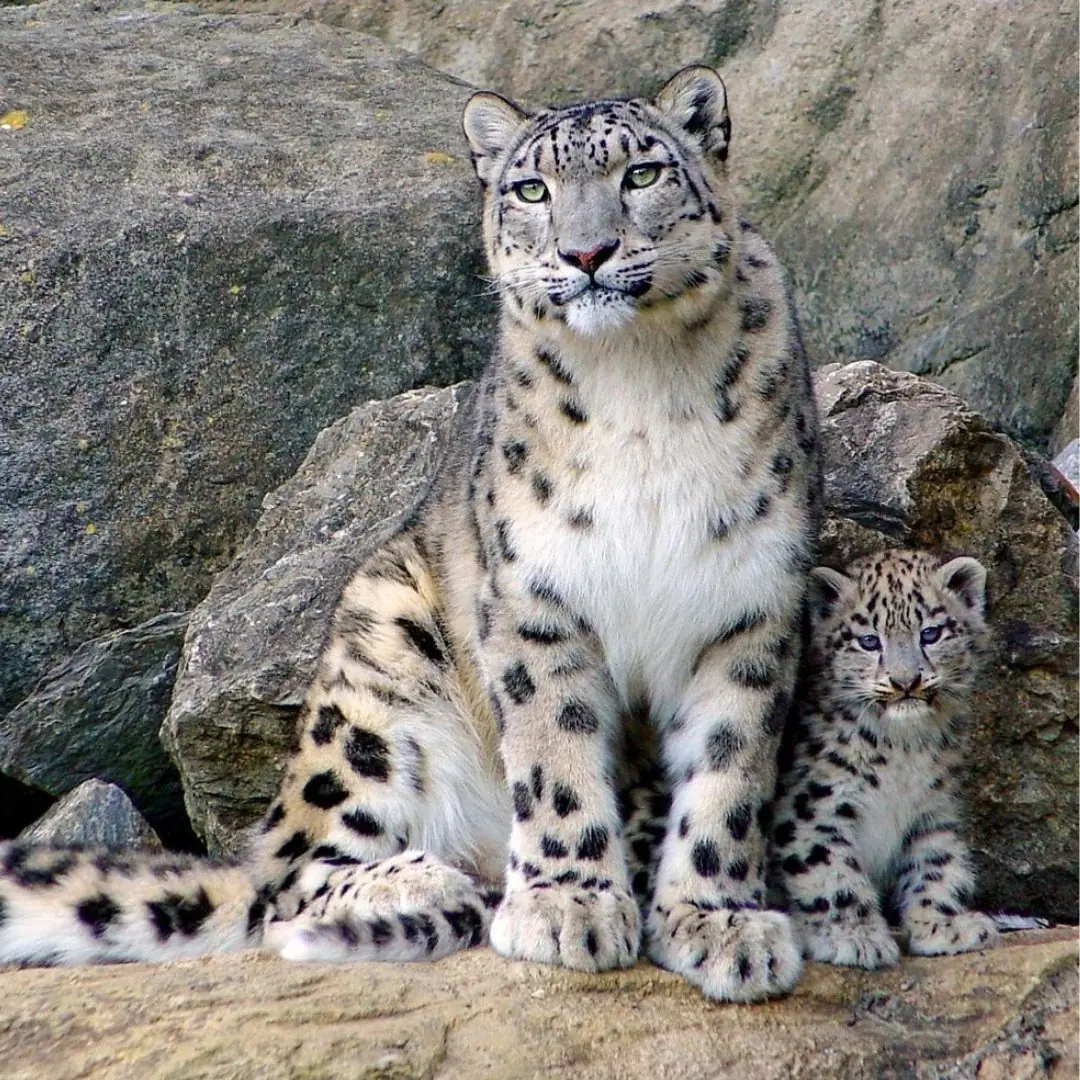
The smaller animal’s coat was fluffier, its eyes brighter, but the resemblance was unmistakable. The mother—Tenzin was sure now it was female—watched him with a calm that was new. Then she nudged the cub forward.
The youngster took a few hesitant steps toward the workshop before darting back to its mother. Tenzin didn’t move. Something unspoken passed between them, a wordless acknowledgment that felt heavier than language.
And then they were gone.
Winter deepened. The pass closed. Life shrank to the village and the mountains that hemmed it in. But Tenzin began finding gifts outside his door: a perfect pinecone, a strip of dried bark gnawed into a spiral, once even the frozen body of a snow grouse.
He knew who left them.
It was the cub’s paw prints he saw in the snow now—smaller, lighter. Sometimes, alongside them, the larger tracks.
The turning point came in late February, when a hunting party from another valley arrived. They were looking for snow leopard pelts—illegal, but lucrative. Their leader, a broad-shouldered man with a scar across his chin, asked too many questions about sightings in the area.
That night, Tenzin lay awake, the cold pressing in through the shutters. He thought of the mother leopard’s eyes, the cub’s shy steps, the gifts in the snow.
At dawn, he took his father’s old field glasses and hiked toward the ridge where he’d last seen them.
The snow was deep, each step a labor. But by midday he found fresh tracks—and then, higher up, the sound of voices. The hunters.
He followed the curve of the slope until he could see them: three men moving toward a cluster of rocks, rifles ready. Beyond the rocks, pressed against the cliff, the mother leopard crouched over the cub.
Tenzin didn’t think. He shouted, waving his arms, stumbling into view. The hunters swore, their shots going wild as the leopards darted along the cliff. The mother disappeared into a cleft of rock, the cub on her heels.
The leader turned on Tenzin, fury in his eyes. “You just cost us a fortune.”
Tenzin said nothing. He simply stood there until they left, muttering threats.
By the time he returned to the village, the snow had covered the tracks.
Spring came slowly to Sakteng. The pass opened. Traders arrived with goods and news. One morning, as Tenzin worked on a stubborn pocket watch, a shadow crossed the window.
He stepped outside.
The mother leopard stood there, the cub nearly grown now. They were close—closer than they had ever been. The mother’s eyes met his, steady and unafraid.
And then, in a movement so quick he almost missed it, she dipped her head. Not a bow, exactly—more a lowering, as if acknowledging something shared.
The cub watched him for a moment, then bounded after her as they vanished into the treeline.
That evening, Tenzin opened the drawer where he kept his most precious repair: his father’s old pocket watch. The mechanism still worked perfectly, though he rarely wound it.
This time, he did. He set it ticking, the sound filling the small workshop.
Some things, he thought, were worth keeping alive—not because they measured time, but because they reminded you it was still passing.
And somewhere in the mountains, two shadows moved silently through the snow, as constant and rare as the ticking of a watch in a forgotten village.