The desert was a place of silence, but for Elias, the clockmaker, silence had never been empty. In his workshop at the edge of the village, the air was filled with the steady ticking of timepieces, from the smallest pocket watch to the great brass pendulum clock by the door. The world outside moved slowly in the heat, but here, each second was measured, precise.
On the day the falcon came, the air was thick with a brewing sandstorm. The horizon blurred into a golden haze, and most villagers stayed indoors. Elias had just finished repairing a carriage clock when he heard a sharp thud against the roof, followed by a frantic scratching sound.
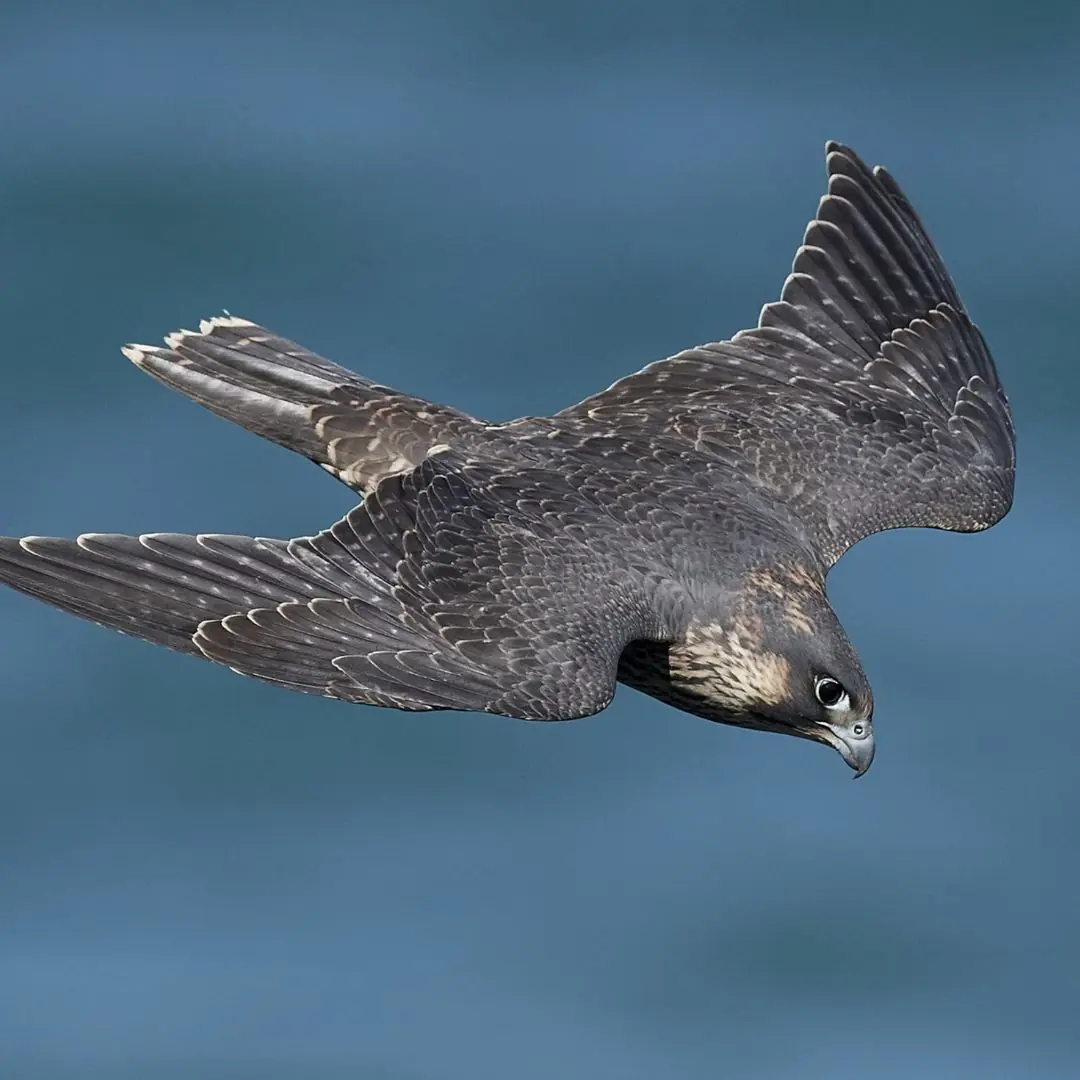
He stepped outside, shielding his eyes against the swirling sand, and there it was — a peregrine falcon, its wings splayed awkwardly, its feathers dulled by dust. One leg was tangled in a thin coil of wire, and a deep cut marked the side of its beak. It looked up at him, eyes bright and unyielding despite its condition.
Elias approached slowly, speaking in a low voice, as if the bird could understand. “Easy now… I’m not going to hurt you.”
When he reached out, the falcon did not flinch. He carried it inside, shutting the door against the wind, and set it gently on his worktable.
Over the next few days, Elias tended to the bird. He cleaned its wound, removed the wire from its leg, and fed it bits of raw meat from the butcher. The falcon ate sparingly at first, then with more vigor as its strength returned. But even as it healed, Elias noticed something strange: the falcon would leave at dusk, slipping out through the open window, only to return by dawn — always carrying something in its talons.
At first, it was small scraps of metal — a bent spoon, the brass casing of a bullet, a tarnished key. Then it began bringing watch parts: a gear wheel, a winding stem, even a cracked glass cover from a pocket watch.
Elias turned the objects over in his hands each morning, puzzled. “What are you trying to tell me?” he asked the bird one day, as if expecting an answer.
One evening, he decided to follow it.
The sun dipped behind the dunes, and the falcon stretched its wings, glancing toward the door. Elias donned his coat, took a small oil lamp, and trailed the bird at a distance. It flew low across the sand, guided by some instinct, until it reached the crumbling remains of an old watchtower — a relic from a war that had ended long before Elias was born.
The tower was half-buried in sand, its stones worn smooth by years of wind. The falcon circled it once, then disappeared inside through a jagged hole near the top.
Elias climbed the outer wall carefully, his fingers finding purchase in the gaps between stones. Inside, the air smelled faintly of oil and rust. In one corner lay a pile of small metal objects — all of them collected by the falcon. But it wasn’t random junk. As Elias looked closer, he realized they were all parts of a single, intricate mechanism.
It was a clock. Or rather, what remained of one.
Not just any clock, but a masterwork of engineering — gears interlocked in complex patterns, with etched plates bearing markings he hadn’t seen since his apprenticeship in the city. It was a design from the old empire, used in military beacons to signal across great distances.
He examined the pieces, his mind working through the possibilities. If this had once been part of the watchtower, then perhaps… it had been used to send messages during the war. And if the falcon was bringing him the parts, then it must know — somehow — where the rest lay.
That night, he returned home with a single brass cog in his pocket, his thoughts racing. The falcon landed on the windowsill just before dawn, dropping another piece onto the table.
Days passed, and together they worked — though Elias was the one with the tools, and the falcon the one with the instinct for finding what was missing. It became a ritual: the bird brought him a part, he cleaned and repaired it, and little by little, the beacon clock took shape again.
As he worked, memories stirred. Elias’s father had fought in that war. He’d rarely spoken of it, except for one story about the desert beacons — towers that could send coded signals across the sand, guiding allies or warning of danger. His father had once mentioned that the final message sent before the ceasefire had never been decoded, and no one knew why.
When the clock was nearly complete, Elias saw that the mechanism had a compartment built into its base. It was sealed tight with a brass plate and a keyhole — and no key.
The next morning, the falcon brought him one last item: a small, ornate key, green with age.
Hands trembling, Elias fitted the key into the lock. The plate clicked open, revealing a folded strip of parchment. The writing was faded, but legible: a series of dots and dashes in an old code.
Elias stared at it for a long moment. His father had taught him the code when he was a boy, as a game during long evenings. Slowly, he began to translate.
When the message was complete, he sat back in silence.
It wasn’t a military order. It wasn’t a warning. It was a plea.
“Cease fire. The war is over. The enemy is not who you think.”
Beneath it, a single signature — his father’s.
Elias felt the weight of the desert pressing down on him. This was why the message had never been delivered — the tower’s beacon had broken before it could be sent. And the war had continued for weeks after, costing countless lives.
The falcon ruffled its feathers and let out a low cry, as if urging him to do something.
And he knew what he had to do.
The following night, Elias carried the repaired clock mechanism back to the tower. He installed it piece by piece, oiling the gears, checking the tension in the springs, aligning the signal plates. When it was ready, he wound it once, and the great pendulum began to swing.
The beacon lit, its signal light cutting through the dark like a blade. Elias fed the message into the code wheel, and the tower began to pulse — dots and dashes flashing across the dunes.
It was too late for the message to change the past, but not too late for the truth to be known.
When the signal stopped, Elias sat beside the clock until dawn. The falcon remained perched on the tower’s highest stone, watching the horizon.
By the time the sun rose, the bird was gone. It never returned to the workshop, though sometimes, in the still hours of the night, Elias thought he heard its cry echoing over the desert.
On his worktable, he kept the small brass key — and the knowledge that time, even when broken, could be repaired.