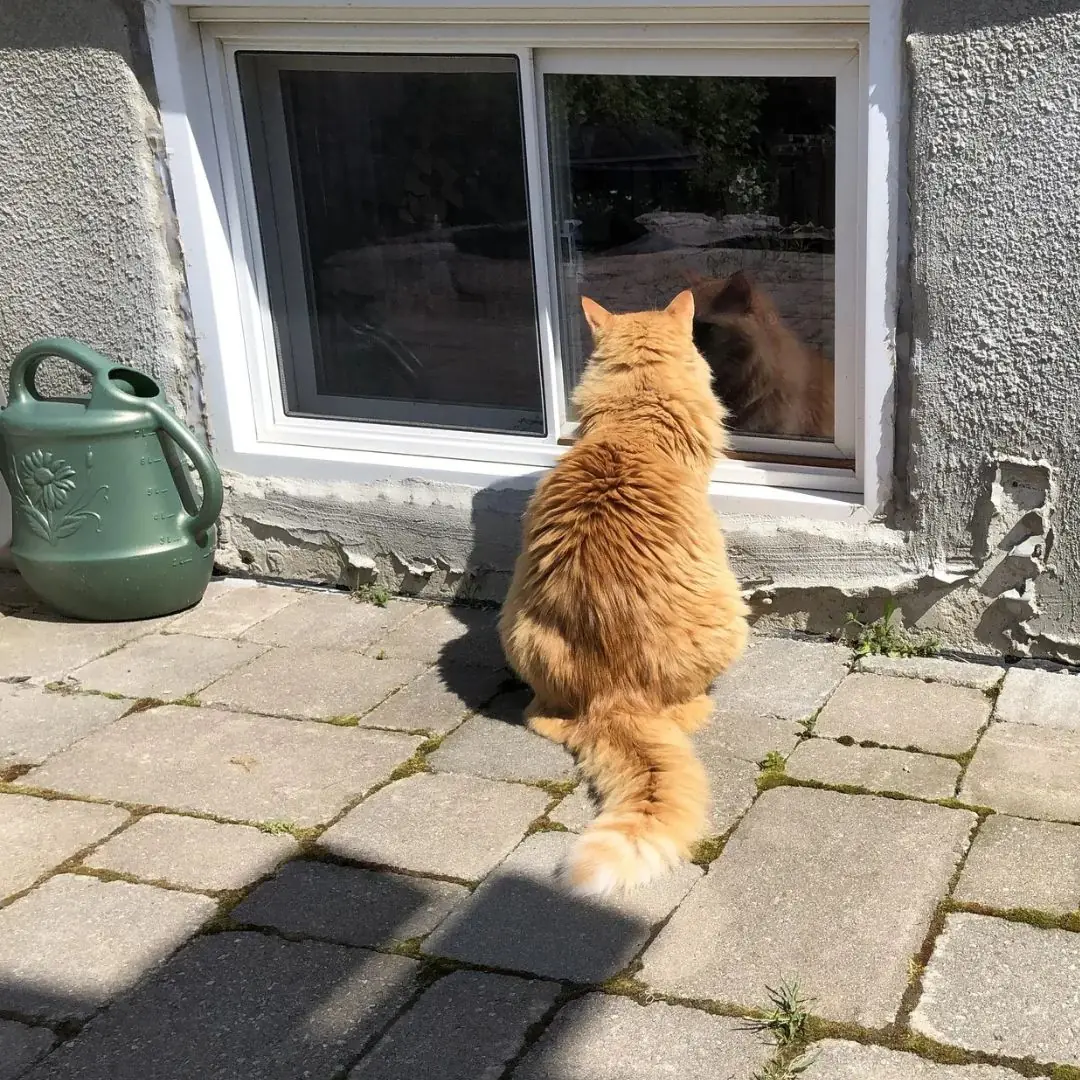
When I moved into that small apartment on Willow Street, I wasn’t looking for companionship. I had just gone through a breakup, lost my job, and wanted nothing more than silence. But the universe, it seems, had other plans.
The first time I saw her was through my kitchen window — a thin, gray cat sitting on the fence, staring at me as if she’d been waiting. It was winter, and frost clung to the glass. Her fur looked matted, her eyes bright but tired.
At first, I ignored her. But every evening, when I came home from job hunting, she was there. Sitting in the same spot, tail curled neatly around her paws. Watching.
On the fifth evening, I finally opened the window and tossed her a piece of leftover chicken. She caught it midair, ate gracefully, then looked up — not thankful, not demanding — just looking. I laughed softly. “You’re welcome,” I said.
From then on, she came every day. Sometimes she meowed softly, other times she simply sat in silence, her eyes following my every move inside the apartment. I started leaving a small bowl of food by the fence.
Weeks passed, and she became a quiet constant in my life — something steady when everything else felt uncertain. I began to talk to her through the window. “No luck again today,” I’d sigh after another failed interview. “Guess it’s just you and me, huh?”
One particularly cold night, I couldn’t bear it anymore. I opened the door and whispered, “Come in, if you want.” She hesitated, then walked in, cautious but composed, as though she’d lived there all along.
I named her Misty.
Misty was not affectionate in the usual sense — she didn’t jump into laps or purr loudly. But she had this quiet presence that filled every room. When I wrote resumes, she’d sit beside the keyboard, her tail brushing my wrist. When I watched TV, she’d perch on the back of the couch, her eyes half-closed but always alert.
Over time, I began to heal. I found a new job, redecorated the apartment, and even started painting again — something I hadn’t done in years. And in every corner of my new life, Misty was there, a soft reminder that love doesn’t always come loudly.
One spring evening, as I was preparing dinner, I realized she wasn’t at her usual spot by the window. I called her name, searched the apartment, even stepped outside. Nothing.
That night, I barely slept. The fence outside looked painfully empty. Days passed. I put up small posters, asked neighbors — no one had seen her.
Weeks later, when I had almost given up, I woke to a sound at the window. I rushed over — and there she was. But she wasn’t alone. Behind her were three tiny kittens, huddled together, blinking at me with the same gray eyes.
I laughed and cried at once. “So that’s where you went,” I whispered. Misty stepped inside, one by one guiding her kittens through the door. She rubbed against my leg — something she had never done before — and purred softly.
From that day on, the apartment felt alive in a way it never had before. The kittens grew, chaos filled every corner, and Misty remained the quiet guardian of it all — always near, always watching.
Years later, when Misty grew old and frail, she spent her days in her favorite spot by the window — the very same place I’d first seen her. One evening, as the sunset poured gold across the floor, she lay there peacefully, eyes half-closed, the light warm on her fur.
When I knelt beside her, she looked at me one last time — steady, calm, grateful. Then, with the faintest breath, she was gone.
I buried her beneath the willow tree outside. Her kittens, now grown, sat quietly nearby as if they understood.
Sometimes, on quiet evenings, I still look toward that window. The sunset hits it just right, and for a brief, fleeting moment, I swear I see her silhouette sitting there — tail curled neatly, eyes watching.
Misty didn’t just fill my home. She taught me that healing can come quietly, on soft paws, one evening at a time.
🐱 Story 2: The Old Man and the Stray Cat
Every morning at exactly seven, Harold sat on the park bench near Maple Avenue, a thermos of coffee beside him and a bag of breadcrumbs in his lap. The pigeons knew his schedule better than the town clock. But one chilly autumn morning, something else appeared — a small black cat, thin as shadow, watching from a distance.
She didn’t come close. Just sat beneath the oak tree, eyes fixed on him. Harold tossed her a small piece of bread, but she didn’t move. “Suit yourself,” he muttered, sipping his coffee.
The next morning, she was there again. And the next. Eventually, curiosity won. Harold brought a bit of leftover chicken instead of breadcrumbs. The cat sniffed it, then ate quickly before vanishing into the bushes.
Days became weeks, and soon, the cat began following him — not too close, just a few paces behind, as if making sure he didn’t disappear.
Harold named her Shadow.
He had lost his wife three years earlier, and since then, silence had become his constant companion. His grown children called occasionally, but life had drifted between long days and longer nights. Shadow changed that.
She began greeting him every morning with a soft meow. Eventually, she let him sit beside her on the grass. One morning, when a cold wind blew through the park, she climbed right into his lap — just like that — curled up and began to purr.
Harold chuckled. “Well, looks like we’re friends now.”
He started bringing an extra thermos — warm milk for her. She, in turn, began walking him home after each morning in the park, waiting outside his small apartment until he went inside. It became their ritual.
Winter came, harsh and unkind. One snowy morning, Harold waited at the bench, but Shadow didn’t appear. He returned the next day, and the next — still nothing. Worry gnawed at him. Finally, he set out through the park, calling softly, “Shadow? Where are you, girl?”
He found her under a bench near the pond, shivering, too weak to stand. Without hesitation, he took off his coat, wrapped her inside, and carried her home.
The vet said it was pneumonia, and she might not make it. Harold sat beside her every night, reading aloud from the old novels his wife used to love. “You’re not going anywhere,” he whispered. “Not yet.”
Weeks passed. Slowly, she recovered. The first time she purred again, Harold laughed through his tears. “There’s my girl,” he said.
After that winter, they were inseparable. She followed him everywhere — grocery runs, morning walks, even the café down the street where he’d read his newspaper. People began calling them “the man and his shadow.”
Years rolled on gently, one season after another. Then one spring morning, Harold didn’t show up at the park. The pigeons still gathered. The bench stayed empty.
When the caretaker came by later, he found Shadow sitting there alone, facing the sunrise. She waited all day, tail curled around her paws, watching the path where Harold always appeared.
That evening, the caretaker gently carried her home. He had read the news — Harold had passed peacefully in his sleep.
But the next morning, Shadow slipped out of his house. She walked the familiar path back to the park and jumped onto Harold’s bench. She stayed there, unmoving, until the sun set.
When the caretaker came looking, he found her curled up exactly where Harold used to sit — silent, still.
They buried her beneath the oak tree beside the bench. A small plaque was placed there later, reading:
“Two souls. One shadow. Forever together beneath the morning sun.”
Now, whenever the park is quiet at sunrise, people say they see a cat-shaped shadow resting on the bench — just for a moment — before fading with the light.