
Serves 1 to 2
These are not just any soft and creamy scrambled eggs; these are the softest and the creamiest scrambled eggs of all time. These are the scrambled eggs that seal the deal on marriage proposals and earn you special brownie points every Mother’s Day brunch. These scrambled eggs put all others to shame.
Want to know the secret to these swoony scrambled eggs? Here’s everything you need to make them for yourself.
Cook Scrambled Eggs Slowly Over Low Heat
The secret to the best scrambled eggs is cooking them low and slow. Low heat equals plenty of time for soft eggy curds to gradually form.
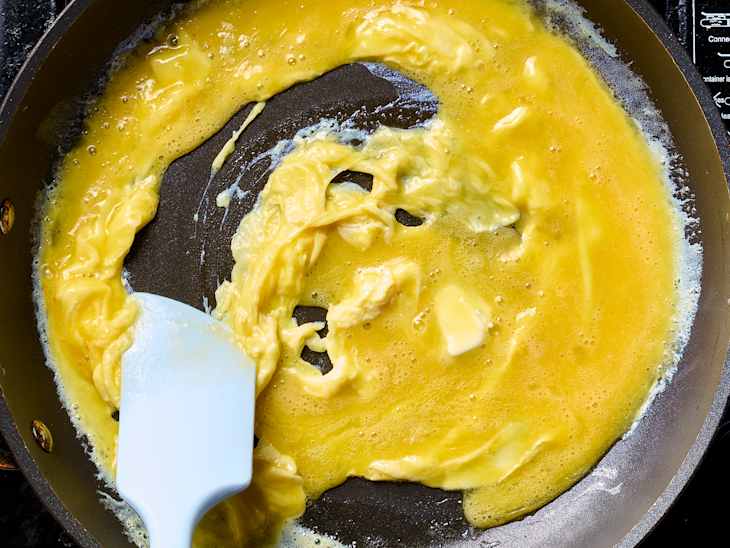
These eggs are cooked in a skillet over the lowest heat you can manage on your stove. Resist the temptation to nudge the dial up. Stir occasionally to mix the cooked eggs on bottom with the still-runny eggs on top, and let the eggs form into billowy curds at their own pace.
The result is creamy, custardy eggs that wobble ever so slightly, and spread like fluffy ricotta on toast. They are simply luscious, and if I’m going to make scrambled eggs, this is always how I am going to do them.
Why Low Heat is Key to Creamy Scrambled Eggs
As eggs cook, compact strands of isolated proteins start to unfold and then get tangled up with each other; in terms of breakfast, this means that eggs go from a runny liquid to solid, delicious curds. If you keep cooking eggs, the protein strands eventually get too tight and tangled, forcing out any water left in the eggs and making the eggs dry and rubbery.
Over medium or high heat, this whole process happens fairly quickly and results in larger, more firmly set curds in your scrambled eggs. You often get some spots with dry eggs and some spots where they’re still a bit liquidy. And if you try to cook your eggs really quickly over too-high heat, you can easily overshoot your mark and wind up overcooking the eggs.
When you cook eggs over low heat, everything slows way down. The eggs cook more evenly and with less evaporation of water, resulting in softer, more luscious curds. The eggs transition slowly from liquid to a solid, so you can easily stop cooking whenever the eggs are exactly as soft or as firm as you like them.
Also, if you stir frequently, you can make scrambled eggs with tiny curds that are the texture of ricotta cheese, or you can just stir just every so often to make larger curds.
How to Season Scrambled Eggs
I am a big advocate of adding salt and pepper to the eggs when you whisk them. This seasons the scrambled eggs from the inside out, instead of just seasoning the surface. (For eggs with the most tender texture, let them sit after seasoning and before cooking.) If you want to add chopped herbs to your eggs, save those to either fold into the finished eggs or sprinkle over top.
Tips for Making Soft, Creamy Scrambled Eggs
- Embrace the slightly lobger cook time. The idea of cooking something low and slow normally doesn’t jive with our morning routines, but these eggs are the exception. Yes, they take 10 to 15 minutes to cook, but they don’t require you to stand at attention the whole time. Get them going, then go brew your coffee and make some toast. Give them a stir every so often, whenever you pass near the stove. Before you know it, they’re ready and you can sit down to a fantastic breakfast.
- Cook them for one or cook them for many. Since the heat is so low, it doesn’t really matter how many eggs you cook at once. More eggs will take a few extra minutes and should be stirred a bit more frequently to make sure everything cooks evenly, but the process is the same — and so are the resulting creamy scrambled eggs.

How To Make Slow-Cooked Scrambled Eggs
Serves 1 to 2
Ingredients
-
2 or more large eggs
-
1 teaspoon unsalted butter
-
1 teaspoon heavy cream or whole milk per egg (optional)
-
1/4 teaspoon salt
-
Pepper
-
Chopped fresh herbs (optional)
Equipment
-
Bowl
-
Whisk or fork
-
Skillet or saucepan, preferably nonstick or cast iron (use a bit of extra butter if cooking in stainless steel)
-
Wooden spoon or spatula
Instructions
-
Begin warming your pan: Place the pan over low heat on your stove. Add a teaspoon of butter and let it begin to melt while you whisk the eggs.
-
Whisk the eggs together: Crack all the eggs into a bowl. Whisk them vigorously until the whites and yolks are completely mixed, and the eggs are a bit frothy.
-
Season the eggs: Whisk the salt and a few grinds of pepper into the eggs. If you like, also add a tablespoon of cream or milk. Whisk to combine.
-
Pour the eggs into the pan. The eggs will spread out in a thin layer — that's fine.
-
Cook the eggs for 10 to 15 minutes. Stir the eggs occasionally with a spatula. At first the eggs will be very liquidy; then you'll notice large, opaque curds starting to form. Eventually, the eggs will no longer run in to fill the gaps when you stir. Frequent stirring will give you smaller curds; stirring less frequently will give you larger, irregular curds. Continue cooking until the eggs are as soft or as firm as you like them.
-
Remove the eggs from heat slightly before they're done: The eggs will continue cooking for a minute or two off the heat, so remove them when they're almost — but not quite — as cooked as you like them. If you want to add herbs, stir them in now, or sprinkle over the top.
-
Slide the eggs onto a plate and enjoy! These eggs are best eaten as soon as they're off the stove, but if you'd like to keep them warm for a little while, see the instructions below.
Recipe Notes
You can hold these in a slightly warm oven, or in a double boiler, to keep them warm for brunch. But they cook so slowly, especially when you are doing a larger quantity, that it should be easy to time them precisely for when you sit down to eat.