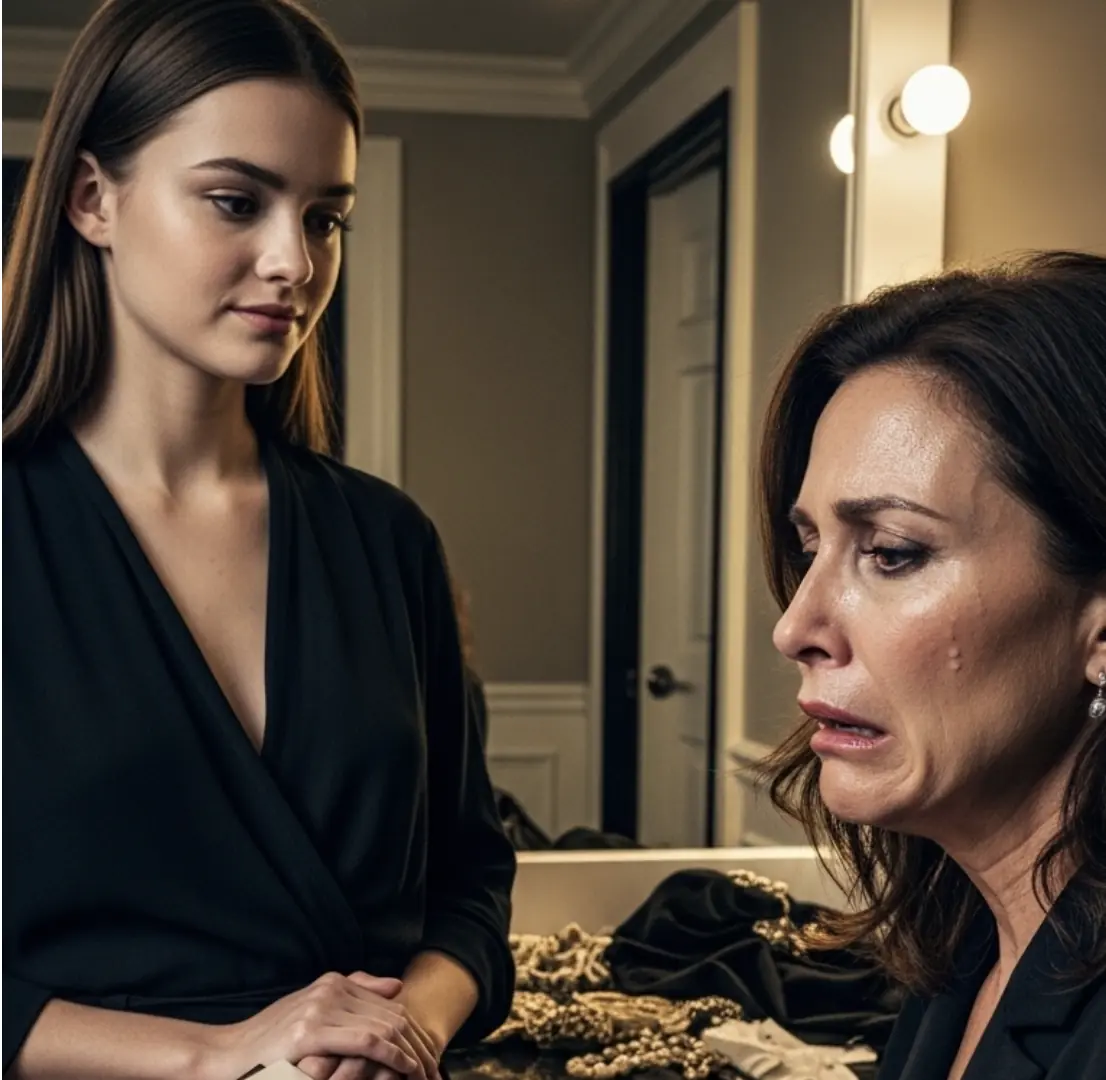
When Grace Miller woke up that Sunday morning, sunlight already spilled across her bedroom floor, the smell of pancakes drifted down the hallway, and she thought — for one blissful second — that her family was whole again.
Then she remembered: her husband Mark had moved out three months ago. The pancakes weren’t for her. They were her thirteen-year-old daughter’s attempt to fill the silence he’d left behind.
Grace sighed, pulling on her robe. From the kitchen came clattering, sizzling, and the occasional muttered curse. She smiled faintly. “Please don’t burn down my kitchen,” she called out.
“Almost done, Mom!” came Sophie’s cheerful voice — a brightness too deliberate, too practiced.
Grace had learned to read between her daughter’s smiles. Sophie had inherited her father’s optimism, but lately it felt stretched thin — a balloon ready to burst.
When Grace stepped into the kitchen, she found the counter covered in flour, a carton of eggs half-spilled, and her daughter grinning proudly beside a plate of pancakes shaped vaguely like hearts.
“Happy Mother’s Day!” Sophie said, thrusting forward a tray that also held orange juice, bacon, and a single pink rose in a glass.
Grace blinked back tears. “You did all this for me?”
Sophie nodded. “And… there’s more. But you have to eat first.”
Grace sat down, forcing herself to take a bite. They were rubbery and half-burned — but she’d never tasted anything so perfect.
After breakfast, Sophie disappeared into her room. The sound of tape, scissors, and muffled whispers filled the air. When she returned, she was holding a small, lumpy package wrapped in newspaper and tied with blue yarn.
Grace smiled. “Did you raid the recycling bin again?”
“Budget-friendly wrapping,” Sophie said proudly.
Grace laughed, but when she untied the yarn, the smile faltered. Inside was a photo album. Old, worn, handmade. The kind they hadn’t opened in years.
The first page held a picture of Sophie as a baby, smiling at the camera with icing on her cheeks. “Look,” Sophie said, pointing, “that was my first birthday. Daddy said you made the cake yourself.”
Grace nodded, her throat tightening. “Yeah. That was the year we still lived in the apartment on Willow Street.”
As she flipped through the pages, Grace realized the album wasn’t just old pictures. Some were new — printed from Sophie’s phone. Her first day of middle school, the two of them baking cookies, Mark waving goodbye from the driveway with boxes in his trunk.
Grace froze. “You took this?” she asked softly.
Sophie nodded. “I didn’t want to forget. But there’s one more thing. Keep going.”
At the very back was a sealed envelope. Grace hesitated, then unfolded the note inside. It was written in her daughter’s careful handwriting.
“Mom, this isn’t just a Mother’s Day gift. It’s a story about us. I know things haven’t been easy, but I need you to see what I see. You didn’t lose everything. You still have me. And maybe… we can still fix the rest.”
Grace’s hands trembled. “Sophie…”
But her daughter wasn’t done. She pulled something else from her pocket — an envelope, thicker, sealed with the logo of Riverside Law Offices.
“I found this in Dad’s study last week,” Sophie said quietly. “I wasn’t snooping, I swear. But… I think you should read it.”
Grace’s stomach turned. She recognized the name immediately — Mark’s lawyer.
Her fingers went cold as she tore it open.
Inside were divorce papers. Signed. Not by Mark — by her. Her signature. Except she’d never signed anything.
For a moment, the room tilted.
“Sophie, where— how did—”
“I think he was going to file it after Mother’s Day,” Sophie whispered. “I heard him talking to Grandma on the phone.”
Grace gripped the counter, breath shallow. “He forged my signature.”
She wanted to scream, to cry, to break something. But then she looked at her daughter — trembling, eyes wide with fear — and forced herself to breathe.
“Thank you,” she said instead. Her voice was quiet but steady. “You did the right thing.”
That afternoon, Grace drove to Mark’s apartment. The same beige walls, the same bland furniture — but something in her was sharper now, heavier.
He opened the door, surprised. “Grace? What are you doing here?”
She held up the papers. “You tell me.”
His expression flickered — guilt, then resignation. “I was going to talk to you after today. I didn’t want to ruin Mother’s Day.”
“Forging my name would’ve done that,” she said coldly.
He sighed. “It’s not what you think.”
“Then explain it.”
Mark rubbed his temples. “It’s just… I thought it would be easier. Cleaner. I didn’t want to drag you through court.”
Grace stared at him. “Easier for you, you mean.”
Silence.
“You walked out, Mark. But she—” Grace’s voice broke. “Sophie still looks for you every morning. She still sets an extra plate at dinner.”
Mark looked away. “I didn’t know she’d found the papers.”
“She did. And she brought them to me. On Mother’s Day.”
That landed like a stone. He closed his eyes, shame flickering across his face.
“I messed up,” he said finally. “I thought I was protecting everyone by ending it quietly.”
Grace swallowed. “You don’t protect a family by pretending it’s disposable.”
Back home, Sophie was waiting on the porch, clutching the photo album. “Did you talk to him?”
“I did,” Grace said softly. “And you were right. He needed to hear the truth.”
“Is he mad at me?”
Grace knelt beside her. “No. I think… he’s finally listening.”
Sophie exhaled, relief mixing with something older — understanding. “I just didn’t want us to stop being a family.”
Grace pulled her close. “We never will. It just might look a little different now.”
A week later, Mark came by unannounced. He looked different — tired, but sincere. He handed Grace a small envelope.
Inside was a check. “It’s for Sophie’s school trip. And… for the house repairs you mentioned.”
Grace looked up. “You don’t have to—”
“I want to,” he said. “And I want to make things right. Not with fake signatures. With effort.”
Sophie ran out then, hugging him without hesitation. “Does this mean you’re moving back?”
He smiled sadly. “Not yet, kiddo. But I’ll be around more. Promise.”
Grace watched them — father and daughter — and for the first time in months, she didn’t feel anger. Just exhaustion, and something gentler beneath it.
Over the next few months, small things began to shift.
Mark started joining them for Sunday dinners. Sometimes he stayed late to help with dishes, and sometimes he didn’t. Grace no longer waited for him to change; she focused instead on rebuilding what was still standing.
One evening in July, as the three of them sat eating takeout in the backyard, Sophie looked up and said, “Can we start a new album?”
Grace smiled. “What should we call it?”
Sophie thought for a moment. “Maybe… After the Storm.”
Mark met Grace’s eyes across the table. “That’s a good name.”
Grace nodded. “It is.”
By autumn, the house looked different — lighter somehow. There were still cracks, yes, but they’d been filled with something stronger than denial.
One Sunday, Grace and Sophie baked pancakes again. They were still misshapen and uneven, but this time they made too many — enough to pack a small box and leave it by Mark’s door.
He texted a photo an hour later: a half-eaten pancake, syrup dripping, and a message — Best breakfast I’ve had in years. Thank you.
Grace smiled at her phone, then at her daughter. “Looks like your tradition’s catching on.”
Sophie grinned. “Told you pancakes fix everything.”
On the next Mother’s Day, a year later, Grace woke to the smell of bacon and the sound of laughter — not just Sophie’s, but Mark’s too.
When she walked into the kitchen, they both yelled, “Happy Mother’s Day!”
The table was full of flowers, cards, and — of course — pancakes. But this time, there was also a small box wrapped neatly in pink ribbon.
Grace opened it carefully. Inside was a new photo album.
The first page held a recent picture — the three of them together in the backyard, sunlight warm on their faces.
Beneath it, Sophie had written:
“We’re not broken, Mom. We’re just learning to rebuild. And you taught us how.”
Grace’s throat tightened. She looked at them — the man she’d once loved, the girl she’d given everything for — and she realized the gift wasn’t just the album.
It was the reminder that love, even fractured, could be mended with honesty, patience, and a child’s faith in what’s still possible.
She reached across the table, taking both their hands. “Thank you,” she whispered. “For reminding me that family isn’t about who leaves — it’s about who stays to make things right.”
And for the first time in years, the air around them felt whole again.