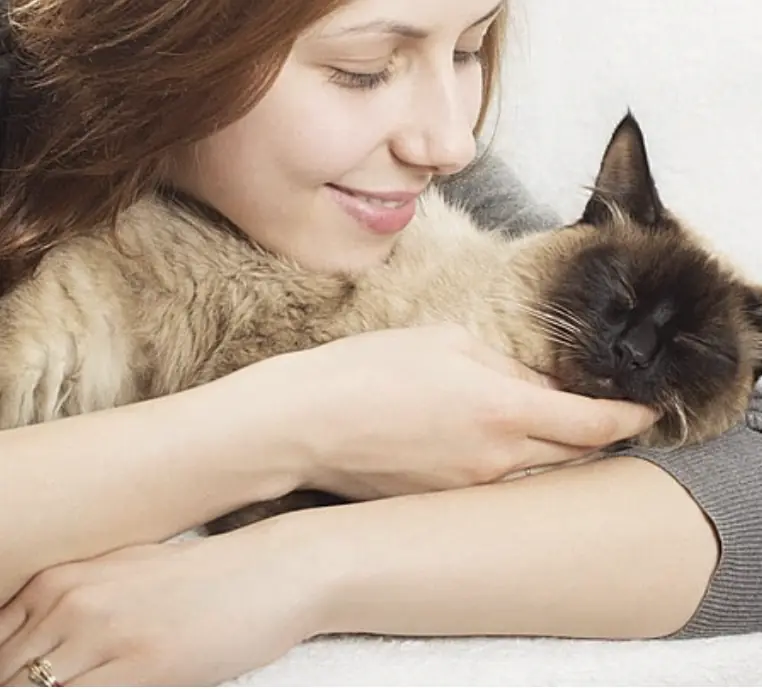
When I first found Luna, she was a trembling ball of gray fur hiding behind a dumpster in the rain. I remember that night vividly — thunder rolling over the city, streetlights flickering through mist, and me, soaked to the bone, clutching a grocery bag and a heart that felt far too heavy for my chest.
My marriage had ended just three weeks before. The silence of the apartment was unbearable — no laughter, no footsteps, just the hum of the refrigerator and the hollow echo of my thoughts. I wasn’t looking for companionship that night; I just wanted milk and bread. But fate, as it often does, had other plans.
When I bent down to look under the dumpster, two golden eyes met mine. They were wide with fear but glimmered with something else — a flicker of stubborn life. “Hey there,” I whispered, unsure why I was talking to a cat. “You okay?”
She hissed softly, but when I offered a piece of bread, she crawled forward, cautious but desperate. She was skin and bones, fur matted, one ear nicked. I didn’t think — I just wrapped her in my jacket and carried her home.
The first night, Luna refused to eat. She stayed curled in a corner, watching me like I might turn into a monster at any moment. I named her anyway — “Luna,” because the moonlight from the kitchen window fell on her like a silver blessing.
For days, we existed in quiet observation of each other. I’d sit at the table, working on my laptop, pretending not to notice her creeping closer. She’d inch forward, stop, stare, then retreat if I so much as breathed too loudly.
It was the kettle that broke the ice.
When it whistled, Luna darted under the couch, terrified. I laughed — the first genuine laugh I’d made in months — and she peeked out as if to see if I was mocking her. “It’s okay,” I said softly. “It’s just tea.”
I poured a cup, sat on the floor, and waited. After a few minutes, she came out, sniffed the air, and brushed against my leg for the first time. It felt like an apology — or maybe a truce.
From that moment, something shifted.
Luna began following me everywhere. When I read, she’d curl up on the open pages. When I cooked, she sat on the counter, tail flicking as though she were judging my chopping skills. When I cried — which I did, often — she’d climb onto my lap, pressing her tiny head under my chin, her purrs vibrating like a heartbeat.
I’d never realized how quiet love could be until then.
I started waking up early, not because I wanted to, but because she demanded breakfast at 6:05 every morning. I’d grumble, stumble out of bed, and she’d meow indignantly, as if I were the unreasonable one. But her tiny meows filled the silence that had once haunted me.
Little by little, Luna stitched me back together.
Months passed. The seasons changed. My job, which I’d been neglecting, began to stabilize again. I took freelance design work from home, and Luna became my unofficial assistant. She’d nap beside my keyboard, occasionally stepping on it to send half-written emails or scatter fonts across the screen.
One day, while working on a client project, I realized how much my life had changed since that rainy night. I was smiling again — not the kind of smile people wear to hide pain, but the quiet, genuine kind that blooms from peace.
That evening, I took Luna to the park near my building. She perched on my shoulder, purring against my ear as we watched the sunset. People smiled as they passed. “She’s beautiful,” a little girl said.
“She saved me,” I replied without thinking.
The girl giggled. “Cats can’t save people!”
But I knew better.
Then came the day Luna got sick.
It started subtly — she stopped eating, then stopped moving much at all. I rushed her to the vet, heart pounding like a drum. The doctor’s expression was kind but grave. “She’s developed a heart condition. We’ll do what we can.”
I sat in the waiting room, trembling, remembering that first night — her wet fur, her golden eyes, her tiny frame pressed against me for warmth. I whispered to the empty air, “Please. Don’t take her too.”
She stayed at the clinic overnight. I barely slept. When the call came the next morning, my throat closed around the sound of my own name. “She’s stable,” the vet said. “But she’ll need care. Medication, routine check-ups, calm environments.”
Calm environments. I laughed through tears. “We can do that,” I said. “We’ll make it work.”
Caring for Luna changed everything again. I reorganized my life around her needs. My mornings were structured, my workdays disciplined, my evenings quiet and warm. For someone who had once lived in chaos, it was the most unexpected kind of healing — the kind that required gentleness and patience.
Every time I gave her medicine, she’d look at me with those same golden eyes, as if to say, You’re doing fine.
Some nights, when the world felt heavy, I’d tell her things I couldn’t tell anyone else. “You know,” I’d whisper, “I used to think love meant fireworks. Grand gestures. But maybe it’s this — showing up every day, feeding each other’s hearts in small, quiet ways.”
She’d blink slowly, purr, and rest her head on my arm.
A year later, Luna and I moved into a smaller apartment with big windows and soft light. It wasn’t luxurious, but it was ours. I started painting again — something I hadn’t done since college. And without fail, Luna would be there, sitting by the easel, watching every brushstroke like a tiny critic.
One morning, I painted her — curled up in her favorite sunbeam, her fur glowing like liquid silver. When I was done, I realized I wasn’t just painting her image. I was painting the story of us — the loneliness, the rescue, the love that grew between two broken things who somehow made each other whole.
The day I sold my first painting, I bought Luna her favorite treats and a new blanket. We celebrated on the couch with jazz music and soft lamplight. She purred in my lap, kneading the fabric with her paws.
I remember whispering, “You know, Luna, I used to think you needed me. But I think I needed you more.”
Her tail flicked, and she meowed softly — a reply, or maybe just acknowledgment. Either way, I understood.
Two winters later, Luna’s condition worsened. She slept more, ate less, but her spirit never dimmed. Every night, I held her against my chest, listening to her purrs like fragile lullabies.
When she finally slipped away one quiet morning, the apartment fell silent again. But this time, it wasn’t empty. The love she’d left behind filled every corner — in the worn couch cushions, the scratches on the doorframe, the painting of her in sunlight.
I buried her in the garden behind the building, under the tree that bloomed white in spring. I placed her collar beside her and whispered, “Thank you for choosing me.”
Now, years later, whenever I sit by the window, I still catch a glimpse of silver fur in the sunlight — not really there, but somehow always present.
Luna didn’t just teach me how to love again; she taught me how to live again. How to find meaning in small things — a warm cup of tea, a quiet morning, the steady rhythm of companionship.
Sometimes, when life feels overwhelming, I close my eyes and hear her purr in my memory, steady and strong, as if saying, You’ve got this. Keep going.
And I do. Because love, once given, never really leaves. It just changes form — from touch, to memory, to light.